top of page
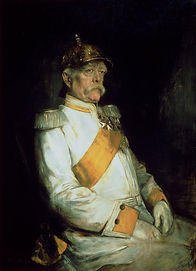
Bismarck.jpg
Catherine the great.jpg
Nelson Mandela.jpg
Joan or arc.webp
Steve-Jobs.jpg

What leaders do when it matters

Great leadership is always contextual. Understanding Greatness looks into what great leaders did, how they did it, and what you can learn from them.

George Washington, Nelson Mandela, Catherine the Great and Steve Jobs. Very different people across centuries and in highly divergent situations, but all facing similar challenges: how to make tough decisions under pressure, with no guarantee of success

Understanding Greatness examines what they, and many others, did, and how they did it. We look into the situations they found themselves in, the choices they faced, and by doing so distill lessons that travel beyond their time into ours.

Many historical leadership challenges. One Framework. 

Abraham Lincoln

Washington D.C., US | 1862

Challenge to resolve:

Survival

George Washington

Philadelphia, US | 1789–1797

Challenge to resolve:

Consolidation

Otto von Bismarck

Prussia, Germany | 1870 - 1871

Challenge to resolve:

Expansion

Understanding Greatness allows you to compare a general holding a freezing army together in 1776, a chancellor engineering a war in 1871, a CEO deciding what to cut in 1997, or a student figuring out their next move in 2026 variations of similar structural challenges.

From situation to decision: the Understanding Greatness Framework; 

When facing a (leadership) challenge, start here:

First, identify your relative power position. What do you actually have to work with? How secure is your authority and how much room do you have to move?
 

Second, name the core challenge. What is the situation demanding of you right now? Not what you want to achieve, but what this moment requires.
 

Third, look at the strategic approach. Given your position and your challenge, what kind of move does the situation call for?
 

Three questions. Every leadership challenge, every time.

Relative power position
How strong was the position & perceived authority of the leader at that moment?   

Power is more than just a title. It is the combination of authority, legitimacy, and coalition strength at a specific moment.

UG classifies every leader across four positions:


1) Unchallenged

2) Conditional

3) Constrained

4) Fragile.
Core Challenge
What is the situation actually demanding?

Every leadership moment places a specific demand on the leader. Not what they wanted to achieve, but what the situation required before anything else was possible.

UG classifies every leader across four kinds of situations:


1) Survival

2) Consolidation

3) Expansion

4)Transformation
Strategic Choice
What did the leader choose to do? 

The most important classification. It describes the leader's response to the combination of position and challenge they faced.

UG identifies five different kinds of chosen approaches:


1) Restraint

2) Adaptation

3) Pressure

4) Redefinition

5) Innovation
1280px-Siege-alesia-vercingetorix-jules-cesar.jpg

Sign up for more cases & analyses

Thanks for submitting!

bottom of page